Spring Means Nesting Season; What to Do If You Find a Baby Bird
Posted On: May 1, 2025
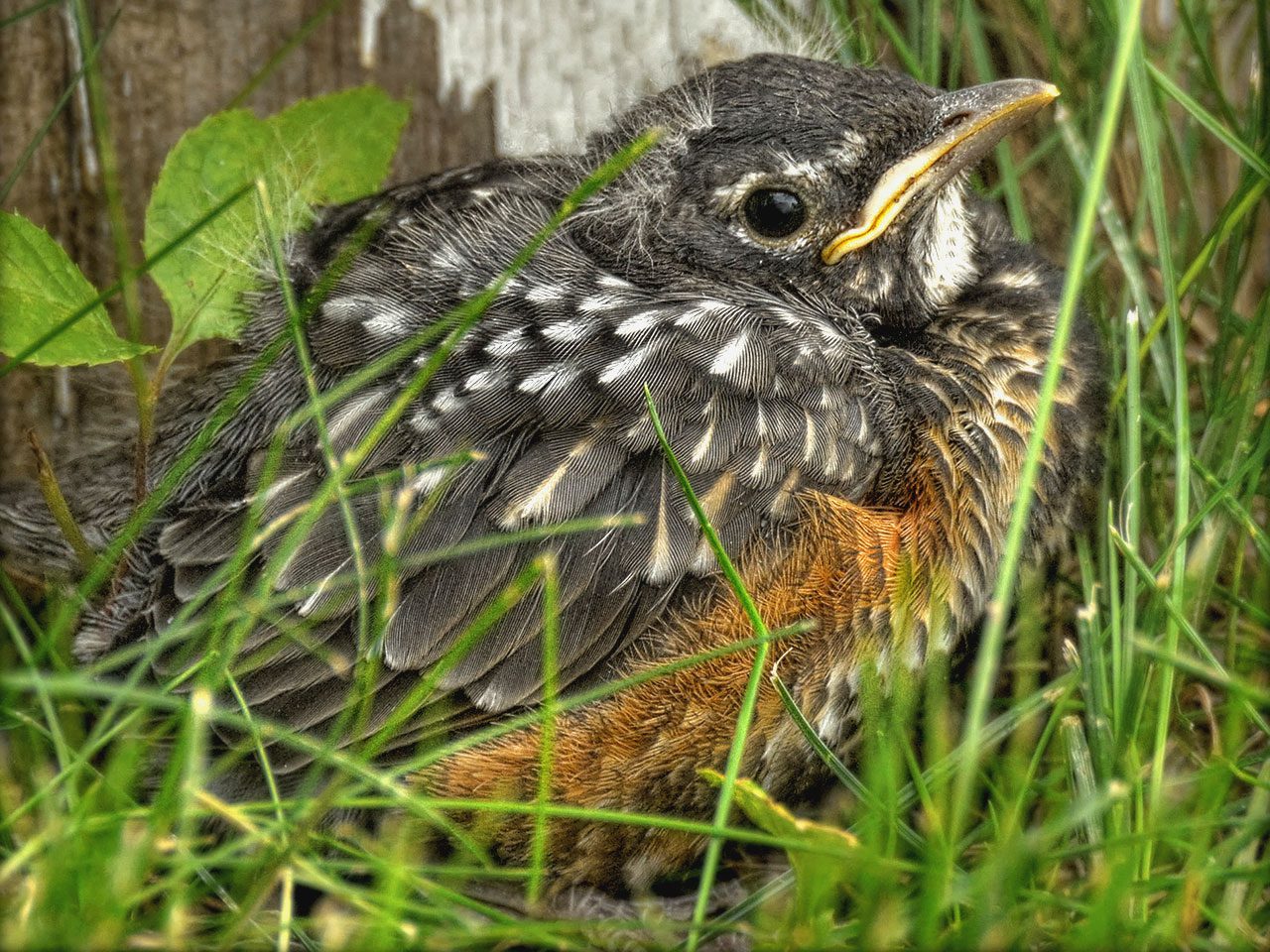
As spring settles in, birds across Florida are busy building nests and raising their young. Unfortunately, this season also brings the possibility of finding baby birds that have fallen out of their nests. The bird care experts at the Marine Science Center are offering important tips to help residents determine the best course of action when they encounter a hatchling on the ground.
Kathryn Hellman, a rehabilitator with the Marine Science Center, explains, “If you find a baby bird that seems sick or injured, look for signs such as an inability to flutter its wings, bleeding, wings drooping unevenly, weakness or shivering, or evidence that it has been attacked by a cat or dog. In these cases, the bird likely requires medical attention, so it’s best to contact a wildlife rehabilitator right away."
If the bird appears healthy, the next step is to determine whether it is a nestling or a fledgling. Fledglings are young birds that have already left the nest and are typically hopping around on the ground as they learn to fly. It is normal for the parents to continue feeding and caring for fledglings even when they are no longer in the nest. If the bird is in a safe location, away from pets or potential danger, it is best to leave it alone. However, if the bird is in an unsafe area, gently place it in a nearby bush or on a tree limb and observe from a distance. If the parents do not return, it may be necessary to contact a wildlife rehabilitator.
Nestlings, on the other hand, are unfeathered and not yet capable of leaving the nest. If you find a nestling, check to see if the nest is intact and nearby. If so, return the bird to the nest and observe from a distance to see if the parents return. If they do, the bird is safe. If the nest is not nearby, a substitute nest can be made by using a berry basket or margarine tub with holes in the bottom. Line it with dry grass, the old nest, or pine needles and hang it from the original tree or a nearby branch. Place the bird in the substitute nest, and if the parents visit, the bird is fine. If the parents do not return, you should contact a wildlife rehabilitator.
“It’s important to remember that a baby bird’s best chance for survival is with its mother,” says Hellman. “And contrary to popular belief, it’s a myth that a bird will reject its young if it has been handled by a human."
To contact a wildlife rehabilitator, call:
- Florida Fish and Wildlife Conservation Commission’s Wildlife Hotline: 888-404-FWCC (3922)