Volusia County's rich historic past
Volusia County borders one of the most diverse collections of prehistoric sites in the nation, making the region a unique study area for those who are interested in Florida of the past. Among these are the highest shell mounds in North America and some of the oldest burial mounds in the southeastern United States. The local array of sites also includes one of the most fascinating early prehistoric ceremonial mounds in the South, the Thursby Mound at Blue Spring.
Like the buildings of today, no two ancient monuments were built exactly the same. Across the nation, the ingredients of these prehistoric works vary. For example, a prehistoric mound to someone in Volusia County is something altogether different to someone who lives in Ohio or, for that matter, anywhere in the North American interior. Here, a mound usually means a heap of shell. Up north, mounds are known mostly for their earthen construction.
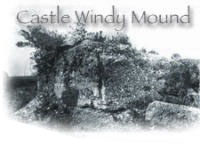
Archaeologists have identified a variety of prehistoric architectural works, commonly known as “Indian mounds,” in Volusia County. Noticeably absent from the Volusia landscape are the elaborate serpent mounds found mostly in the Midwest or the animal-shaped earthen works common to the Mississippi River Valley. Still, this area offers a spectacular collection of mounded archaeological sites.
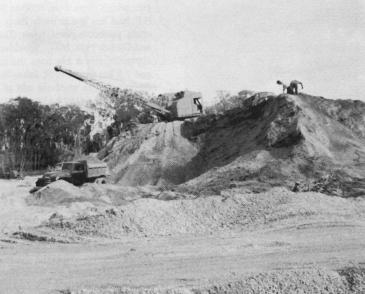
The shape and composition of each of these mounds tells archaeologists a great deal about the way the monuments functioned during prehistoric times. Over the past century, archaeologists have studied the characteristics of these works and have carefully excavated their contents to learn more about the past life ways of Native Americans who lived here hundreds and, in some cases, thousands of years ago.
Most common in the area are shell mounds, composed of millions of oyster, clam shells and, along the St. Johns River, freshwater snails. These mounds are actually huge shell middens or piles of prehistoric trash, the aggregate of innumerable ancient meals. Over time, the smaller piles of refuse became larger trash heaps and eventually were formed into the mountains of debris we know as shell mounds.
The shell mounds are comparable to modern-day landfills. By excavating through the layers and layers of prehistoric trash, archaeologists can tell which types of foods were eaten by Florida’s first people and how the native diet changed over the centuries. Most of the shell mounds and lesser middens in the County area are packed full of fish bone, indicating that prehistoric coastal and river dwellers had a preference for fish.
But the mounds contain materials other than shell debris. Important artifacts, such as shell, bone and stone tools, along with an abundance of pottery shards, reveal much about the everyday activities of the natives who once lived on or near the site.
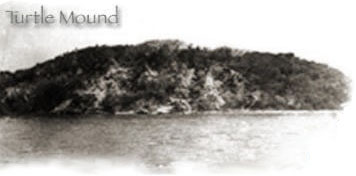
Some of the best examples of shell mounds in the nation are found right here in Volusia County. Turtle Mound in Canaveral National Seashore is the tallest shell midden in the United States. It has been estimated that the two-acre site contains over 35,000 cubic yards of oyster shell, extends over 600 feet of the Indian River shoreline, and currently measures over 50 feet in height. In prehistoric times, it was at least 75 feet high. Visible for miles offshore, the mound has been used as a navigational landmark since the early days of Spanish exploration.
The park offers an educational boardwalk ascent to the top of Turtle Mound with interpretive signs along the way. At the top of the mound, the panoramic view of the Atlantic Ocean, Merritt Island, the Indian River, and Mosquito Lagoon is spectacular and one which was surely enjoyed by the prehistoric people of the area.
Nearby, another mountainous shell heap, called Green Mound, forms the highest elevation in the city of Ponce Inlet. The giant oyster midden served for hundreds of years as a platform for ranked members of prehistoric cultures who once inhabited the lower Spruce Creek area. This well-hidden archaeological site once measured well over 50 feet in height before road fill workers in the 1940s and ongoing erosion reduced its size. Still, it towers well over 40 feet in height. From its peak, one can see the Atlantic Ocean to the east and to the west the vast estuaries which provided an abundance of food for the site’s prehistoric inhabitants.
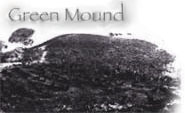
Archaeological investigations at Green Mound indicate that the site was constructed and used during the late St. Johns period, or after 800 A.D. The excavations, conducted over the last 50 years, have revealed the presence of layer after layer of living floors made of burned clay, sand and ash. Fire pits, post holes, and associated construction debris suggest that structures were once present on the mound.
The houses were most likely the palmetto-thatched dwellings of chiefs and high priests in that the most important members of a prehistoric society lived in the highest and most desirable locations. As the mound grew in proportion, the site became status related and, consequently, became more important socially and politically. The elevated areas of a ceremonial mound were usually reserved for the elite.
While Green Mound is a spectacular monument to prehistoric life in east Florida, the site has even greater archaeological significance. Scientific research at the mound in the 1940s by the late Dr. John Griffin set the standard for archaeology in Florida. The results of Griffin’s excavations, published in a now-famous Florida Naturalist article entitled, “Green Mound: A Chronological Yardstick,” established the framework for the study of prehistoric cultures on the east coast and in the state.
The Old Fort Mound in downtown New Smyrna Beach is another well-known shell mound on Volusia’s east coast. While this site is mostly known for its “old fort” ruins, the foundations of an 18th Century warehouse from the Turnbull British colony of New Smyrna, it is the enormous shell midden in which the ruins are situated that are of great antiquity. Excavations at the Old Fort Mound revealed deep deposits of shellfish, mostly oyster, with a great amount of animal bone found throughout. Fish bone recovered from the site indicates that prehistoric people in this area were accomplished fisherfolk who caught a wide variety of marine fish. Pottery resulting from the excavations indicate that the site was first occupied around 500 A.D. and continued to be used well into the late St. Johns period, around 1500 A.D.
Commonly associated with shell middens and mounds, indicators of prehistoric villages, are sand burial mounds. This is the type of site which usually comes to mind when the term “Indian mound” is heard. Most burial mounds have unfortunately been plundered away over the years, leaving us with only a few examples of prehistoric mortuary earthen works. One of the best and most accessible is the Ormond Mound on Mound Avenue in the city of Ormond Beach. What looks like a small hill to passersby is actually a mounded burial which contains the skeletal remains of over 125 prehistoric people.
Florida natives have buried their dead this way for some time, as shown by a recently-investigated burial mound in the Tomoka River Basin which was radiocarbon dated to 4,600 years ago. The sand mounds in the basin and surrounding areas tell us that prehistoric folks were living on the coast year-round, long enough to establish permanent cemeteries for deceased members of their societies.
Remaining monumental ceremonial mounds in the county area are few in number, but the ones that are here are indeed impressive. The Spruce Creek Mound in the lower creek basin and the Bissett Mound near Oak Hill were most likely political and religious hubs for prehistoric peoples living in east Volusia County. Both are composed of sand mounded to great heights with ramps for ceremonial processions.
One of the most important prehistoric earthenworks in Florida, the Spruce Creek Mound is situated on the banks of the meandering blackwater stream from which it gets its name. Already positioned on an enormous bluff overlooking the creek, the site was made even larger as prehistoric peoples excavated earth from around the base of the mound, carried it to the top and deposited it. The periodic capping of the mound with soil may have accompanied the ceremonial burial of a chief or high priest and relatives. This idea is supported by human skeletons and status artifacts which have been recovered from the mound.
Judging from the size of the site and the borrow pits around it, a tremendous amount of time and manpower went into the construction of the Spruce Creek Mound. It is likely that the huge earthen mound with its long ramp served as a ceremonial, social, and political center for the hundreds of late St. Johns people that inhabited the lower Spruce Creek basin. Prehistoric populations lived here because of the abundant and stable supply of food, mostly oysters, clams and saltwater fish. Sprawling shellfish middens, the discarded remains of ancient meals, line the basin for miles.
Today, the famous mound remains preserved, although rumors of buried pirate treasure and Indian gold and silver have led to site looting for nearly a century. Now gone, the site’s artifacts could have told the real story of early Spruce Creek peoples.
Near Oak Hill, the huge Bissett Mound, a ceremonial sand mound, is evidence that the people who lived in and around the County’s River Breeze Park area were well organized. The mound was built by prehistoric peoples who excavated earth from around the base of the mound, carried it to the top and deposited it. Over time, the enormous mound became the religious and political focal point for prehistoric people in this region of the Indian River lagoon.
Perhaps the most significant ceremonial site in Volusia county, and some would argue Northeast Florida, is the archaeologically-acclaimed Tick Island on the St. Johns River. Evidence from this site suggests a large and complex society which practiced organized ceremonialism. Some of the earliest pottery in North America has been recovered from Tick Island along with a spectacular array of stone, shell and bone artifacts. Unfortunately, most of these artifacts were salvaged from the shell mound as it was being mined for road fill and destroyed in the 1960s. Archaeologists have dated some of these materials to well before 4000 B.C.
Also located along the St. Johns River is the enigmatic Thursby Mound at Blue Spring State Park. The truncated mound is about 12 feet high and 90 feet in diameter and has a shell ramp leading from the river. The Thursby mound is the closest site we have to the great platform mounds of the west coast of Florida. While smaller in scale, the mound was used in a similar manner to the platform mounds, where political, social, and religious activities were organized in elaborate ceremonies for large groups of prehistoric populations.
The park is known more for its annual gathering of manatees than the archaeological sites which surround it. Manatees have been visiting the warm waters of Blue Springs in the winter for thousands of years - long before prehistoric peoples camped at the spring’s shore and before the area became a popular steamboat stop on the St. Johns River in the late 1800s. While a hundred manatees in the spring today may seem like a great number, the strange-looking animals probably frequented the spring and adjacent areas by the thousands during prehistoric times. Surely, this attracted the attention of early Native Americans who settled the rich river basin areas of the St. Johns and subsisted on such animals.
Prehistoric peoples discovered the spring at least by 1000 A.D. It has been suggested by historians and archaeologists for some time that the natives settled the area because it was a strategic point of land at the confluence of the spring run and the environmentally-rich St. Johns River. While difficult to demonstrate archaeologically, it is also possible that prehistoric peoples congregated at the spring each winter to celebrate the arrival of the manatee. The animals may have symbolized something important to the prehistoric inhabitants, like the coming of spring in other areas of North America. Or they may have served as a major source of predictable food during lean winters.
Archaeologists know that something was celebrated at the spring. Thursby Mound, one of the most interesting ceremonial mounds in the state, derived its name from the late 19th Century owners of the spring. Natives used the long shell causeway leading to the mound from the St. Johns River for ceremonial processions to the religious center on top.
Shell causeways are rare for this area, and are mostly known for the southwest Florida region where the Calusa Indians and their ancestors once lived. The specialized construction of the Thursby Mound suggests that the site’s inhabitants had continuous contact with the complex cultures of South Florida. Gold and silver ornaments recovered from the mound indicate that trade routes were established with the Calusa. These artifacts may have come from shipwrecks along the east coast.
The mound has produced some of the most interesting archaeological materials in Florida, including gold and silver artifacts and intricate ceramic objects. Of these, several toy-like pottery effigies of squash, gourds, berries, and acorns are most enlightening. The clay figures in the form of vegetables suggest that prehistoric peoples at Blue Spring most likely practiced horticulture to some degree.
Another set of ceramic figures were shaped to resemble animals. Recognizable are dogs, bears, squirrels, wild cats, pumas, wild turkeys, fish and turtles. Of great interest to archaeologists is a series of clay animals, labeled “unidentifiable” by scientist Clarence B. Moore who collected them in the 19th century, which closely resemble manatees. If these figures are in fact manatees, the Thursby Mound interpretation may take on a whole new light.
The clay artifacts are stored away in northern museums and are unavailable for viewing, but the Thursby Mound remains today, along with other carefully-preserved prehistoric sites in the region, as a monument to the ancient people who settled early Volusia.