Scrub habitat and species
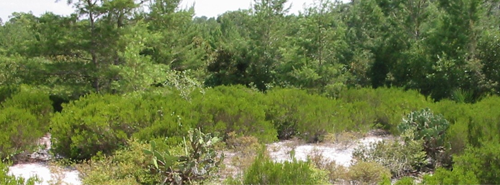 Lyonia Preserve is a 360-acre scrub habitat maintained by Volusia County near the Deltona Regional Library.
Florida scrub is a rare and endangered habitat unique to Florida. Inland scrub occurs on ridges, such as the Ocala Ridge and the Lake Wales Ridge and is formed by remnants of ancient dunes dating back to Pleistocene (1.8 million to 11,000 years ago) sea level changes.
Low-growing shrubs with or without a canopy of pines characterize scrub habitat. Volusia County scrub habitat consists of Chapman oak (Quercus chapmanii), myrtle oak (Q. myrtifolia), sand live oak (Q. geminata), saw palmetto (Serenoa repens) rusty lyonia (Lyonia ferruginea), Florida rosemary (Ceratiola ericoides) and sand pine (Pinus clausa).
Plants and animals found in the scrub have adapted for survival in a habitat that has dry, nutrient poor soil and is fire maintained with infrequent, high intensity fires. It is estimated that forty to sixty percent of species found in scrub are endemic to the habitat, i.e. found only in scrub habitat.
Open patches of sand devoid of vegetation are another characteristic of scrub habitat and are used for foraging by animals like the Florida scrub jay. Gopher tortoises (Gopherus polyphemus) are not restricted to scrub, but they require well drained sandy soils to dig their burrows and are found throughout scrub habitat. Gopher tortoise are listed as a threatened species in their own right and because of the number of species that are associated with their burrows. The Florida mouse lives in a chamber it digs off the side of the main tortoise burrow. It is the only mammal endemic to Florida and is associated with scrub and sandhill communities.
The Florida scrub jay (Aphelocoma coerulescens coerulescens), Florida scrub lizard (Sceoloporous woodi), sand skink (Neoseps reynoldsi) and Florida mouse (Peromyscus floridanus) are a few of the animals endemic to Florida scrub and are Federally and State listed as either Threatened species or Species of Special Concern. Endemic plants include scrub holly (Ilex opaca.), garberia (Garberia heterophylla), silk bay (Persea humilis), Curtiss’ milkweed (Asclepias curtissii) and Florida rosemary (Ceratiola ericoides).
When it rains water drains quickly through the sandy soils of the scrub into the groundwater supplies of the aquifer, taking surface nutrients with it. The drainage properties of the soil make scrub habitat prime development land. Suppression of fire and habitat fragmentation due to development has caused scrub to become scarcer. By protecting scrub habitat, not only do we protect plants and animals but we also provide protection for groundwater recharge sites.