Excessive Rainfall
Excessive Rainfall
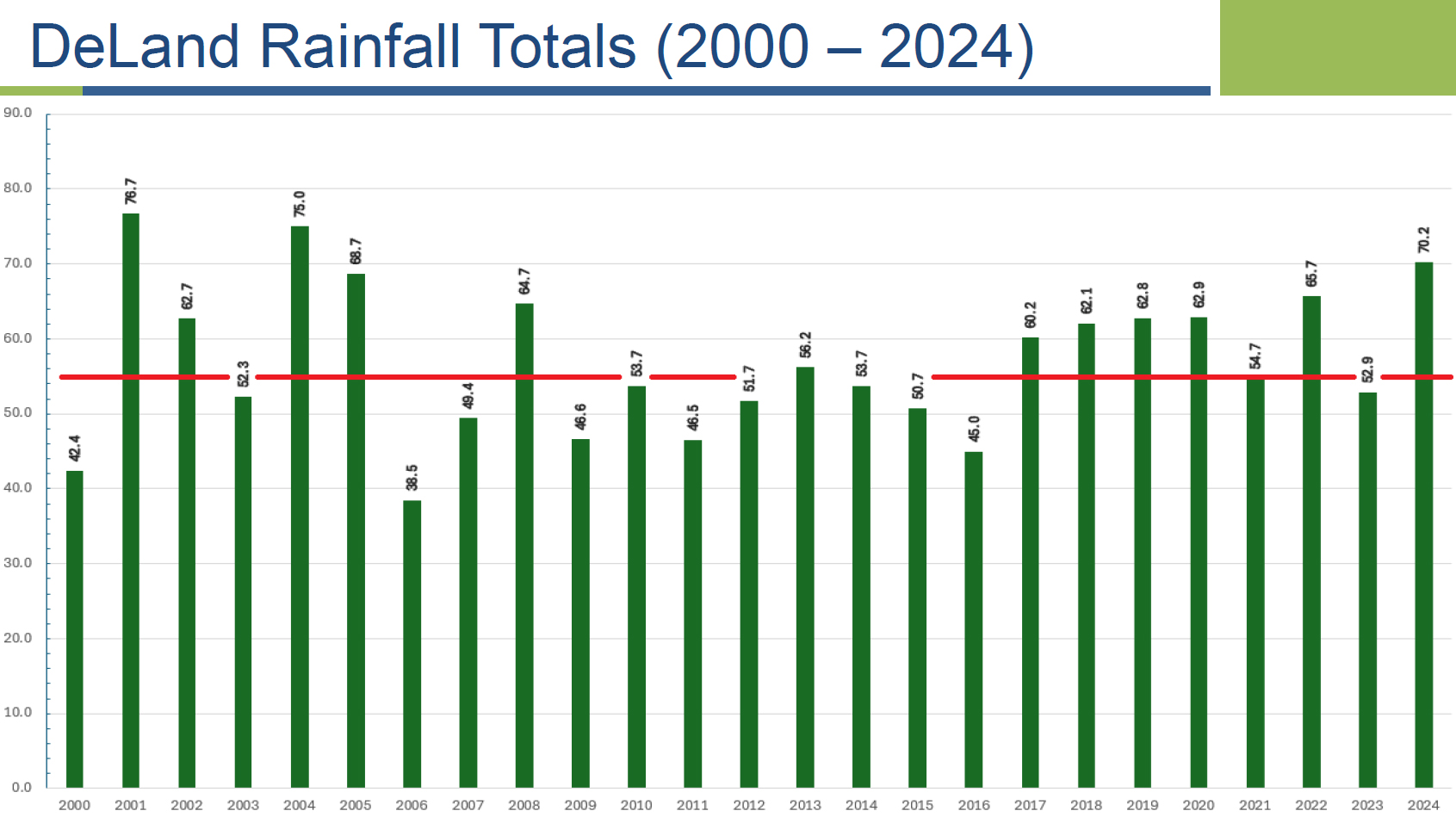
Over the past two decades, Volusia County has experienced an increase in annual rainfall, contributing to rising flood risks throughout the region. Data collected in DeLand, which serves as a representative location within the county, shows a clear trend of higher overall rainfall totals, with recent years seeing sustained periods of heavy precipitation. In 2024 alone, DeLand recorded 70.2 inches of rainfall, well above historical averages. Some of the most extreme years on record include 2001 and 2004, when rainfall surpassed 75 inches. While there have been occasional years with lower totals, such as 2000 and 2006, the overall pattern in recent years shows a shift toward consistently higher precipitation levels.
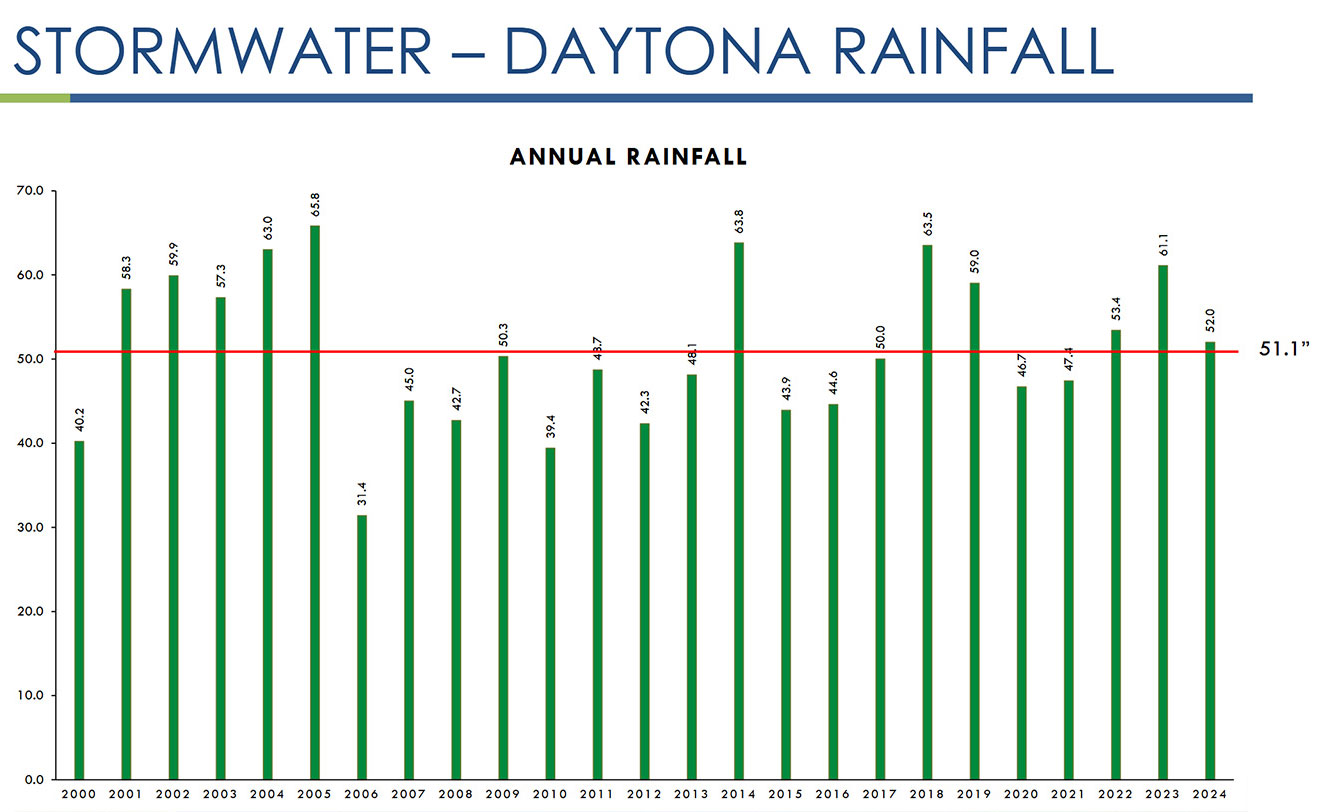
A similar trend is evident in Daytona Beach. From 2000 to 2024, the average annual rainfall in Daytona Beach was 51.1 inches, but many recent years have exceeded that baseline. Notably, 2014, 2017, 2018, and 2023 each recorded well over 60 inches of rainfall, with 2014 reaching 63.8 inches and 2018 topping out at 63.5 inches. These spikes in precipitation place significant stress on drainage infrastructure, especially in lower-lying or flood-prone areas. While some years like 2006 and 2010 were drier, the overall trajectory of Daytona Beach’s rainfall data reinforces what is being seen countywide—more frequent and intense rainfall events are becoming the norm, increasing the risk of localized and widespread flooding.
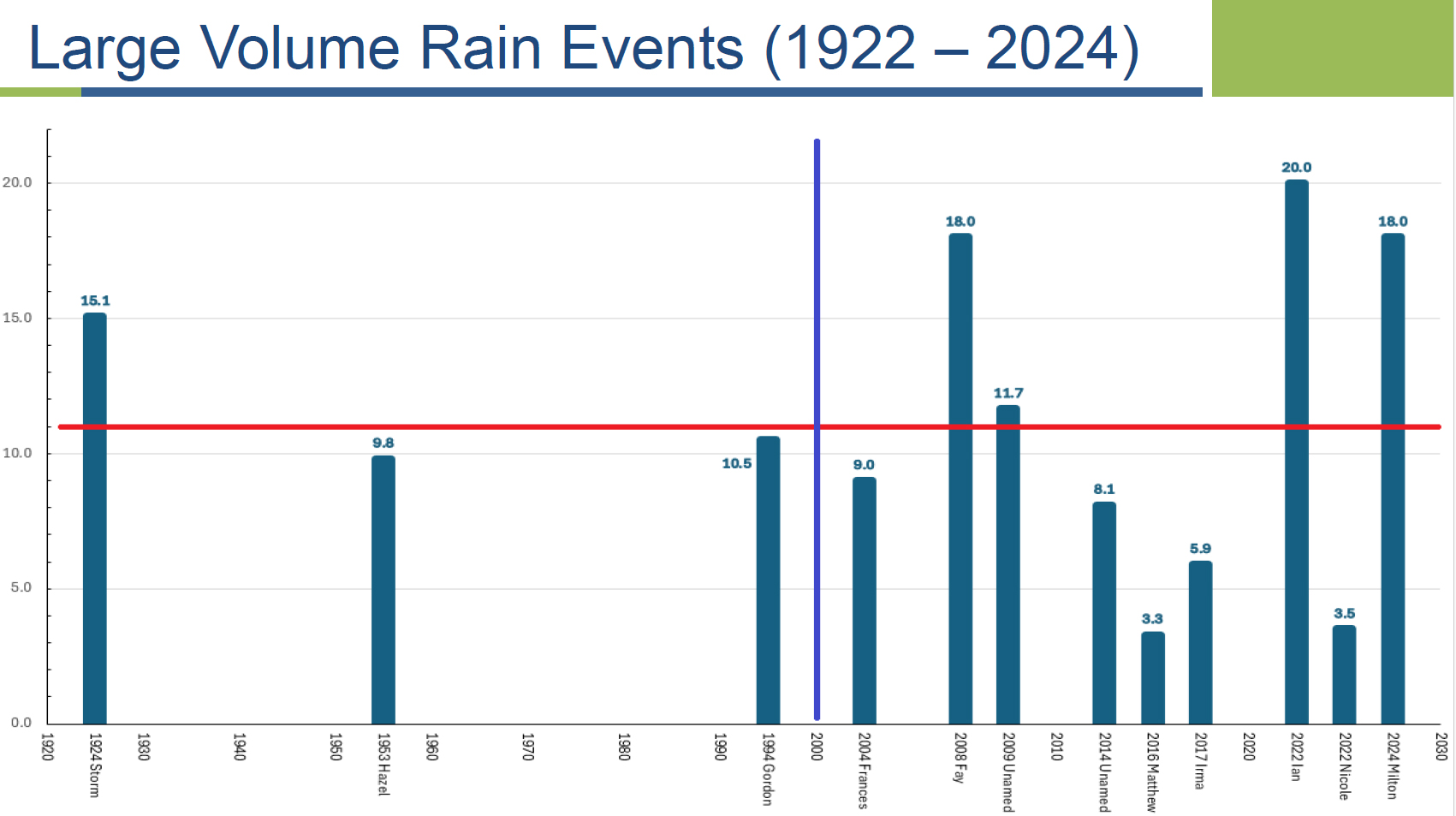
This increase in rainfall has several implications for flooding. When the ground is already saturated from previous storms, additional rain has nowhere to go, leading to standing water and drainage systems being pushed beyond their capacity. The county has also seen more frequent high-intensity, large volume rain events, where significant amounts of water fall over a short period. This was evident in recent storms such as Hurricane Milton in 2024 and Hurricane Ian, which dropped 18+ inches of rain in just 24 hours in various areas of the County, overwhelming stormwater systems and leading to widespread flooding. Even less extreme storms can contribute to flooding if they occur in rapid succession, preventing stormwater systems and retention ponds from recovering between events.
Another contributing factor is the rising groundwater table. With sustained periods of high rainfall, water levels beneath the surface remain elevated, reducing the soil’s ability to absorb additional rain. This results in more surface runoff and an increased likelihood of flash flooding in areas where stormwater infrastructure was not designed to handle such high volume rain events. Additionally, tidal influences along the coast can slow the rate at which stormwater drains, leading to water backing up into neighborhoods and roadways. When heavy rain coincides with high tide, flooding can become even more severe in low-lying and coastal areas.
As rainfall patterns shift, existing stormwater management systems may struggle to keep up with the increased demand. Older drainage infrastructure was built based on historical averages that no longer reflect current conditions. This means that some stormwater ponds and retention areas may no longer function as effectively as they once did, increasing the risk of overflow during heavy rain events.