The Search for Turnbull's Colony
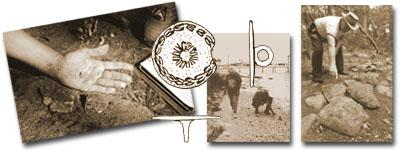
Archaeological research at Turnbull's New Smyrna colony is a relatively recent phenomenon.
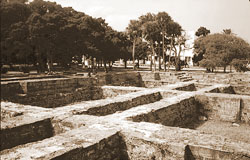
In 1854, while excavating in a prehistoric mound in what is now downtown New Smyrna Beach, workers found the remains of a massive coquina structure that was thought to be a mansion built by Andrew Turnbull. Nearly a century later, archaeologist John Griffin investigated this location in an attempt to determine the true origin and function of this feature. By that time, the coquina ruins had been reconstructed to resemble a fort. But the truth is archaeologists and historians still are unsure of the structure's purpose.
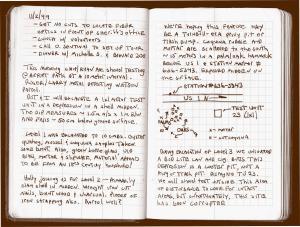
Another 50 years passed before archaeologists again paid serious attention to New Smyrna. Many believed that few intact deposits associated with the colony could have survived modern development. However, in 1995, while excavating at Old Fort Park, archaeologist Dana Ste. Claire found the remains of coquina structures, tabby floors, and British colonial artifacts, all likely evidence of busy town activity. At about the same time, historian and archaeologist Dot Moore was conducting surveys of properties in New Smyrna Beach and finding tantalizing clues that there was more beneath the ground than anyone had previously imagined. She was proven right in 1996 when a planned expansion of an automobile dealership on U.S. 1 threatened an area where cut coquina blocks and wall mortar had been found. After consulting with the owner of the dealership, Moore, along with archaeologist Roger Grange and 50 volunteers, spent over a year excavating the remains of a colonist's house and associated outbuildings.
Although exciting and important discoveries were being made, the efforts were piecemeal and often occurred during construction with no advance warning. Consequently, in 1998, the cities of New Smyrna Beach and Port Orange, along with Volusia County, obtained a grant from the Florida Department of State to conduct a comprehensive survey to locate archaeological sites associated with the colony. The survey was conducted by Southeastern Archaeological Research, Inc. with Roger Grange and Dot Moore serving as consultants. Nearly 40 colonial-period archaeological sites were documented, including several that contain significant structural remains.
After more than two centuries, New Smyrna's original town plan is beginning to emerge once again. Archaeological surveys and excavations are adding a visible, material dimension to the documented history of the colony. An overlay plan of the settlement has been developed that will make the task of locating additional remains associated with the colony much easier. Future archaeological surveys and excavations, in combination with focused historical research, will provide a wealth of new data with which to fill in the gaps about life in 18th Century New Smyrna. Finally, historians and archaeologists will be able to contribute additional chapters to the story of one of Florida's greatest colonial experiments.