
Prehospital Whole Blood Program
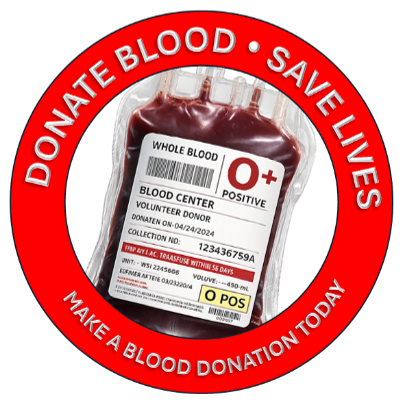 Beginning in October 2026, Dr. Jessica Daly, Volusia County EMS Medical Director, will launch a new program providing prehospital delivery and transfusion of low-titer, O-positive whole blood under specific clinical indications. While locally developed, the prehospital whole blood (PWB) program adheres to industry standards with a focus on patient safety, effective deployment, and keen focus on being mindful stewards of this precious resource.
Blood? Who supports prehospital blood transfusions? Among the many supporters of this program are:
- The American College of Surgeons, Committee on Trauma (ACS/COT) “is advocating for universal access to prehospital blood”.
- The United States Department of Transportation, National Highway Traffic Safety Administration (USDOT/NHTSA), National EMS Advisory Council recognizes that an “estimated that 37% of trauma patients with severe bleeding could be saved. For every minute of delay in administering blood, the risk of death increases by 11%”.
- In a written letter to the Florida Department of Health, the Florida Trauma System Advisory Council (FTSAC) asked that they “support, enable, and scale prehospital blood administration” as “(u)ncontrolled hemorrhage remains the leading cause of preventable death in trauma”.
Where does the blood come from? Volusia County contracts with OneBlood, a not-for-profit Florida corporation, in a cooperative effort with Halifax Health. OneBlood is the same vendor from which many hospitals receive blood. All their product is collected, tested, and maintained under the United States Food and Drug Administration (USFDA) regulations.
Under what circumstances will whole blood be provided? The initial focus is on traumatic injuries (i.e., motor vehicle accidents, bicycle accidents, gunshots, etc.). We’ve coordinated with both local trauma centers (Halifax Health and HCA Florida Lake Monroe) as well as Orlando Health and all of these partners have embraced and contributed to this program.
How will the blood be delivered? The initial partnership is with the Volusia County Emergency Medical Services (EMS) division. USFDA-certified refrigeration units will be placed on field supervisory units in the east- and west-Volusia regions. Training has been provided with all EMS providers within Volusia County. Their early recognition is key to alerting the supervisor and coordinating delivery of blood to the scene or rendezvousing with the ambulance during transport.
Will whole blood be available only on Volusia County EMS division units? No. The PWB program is available systemwide and on any county transport unit or municipal transport units that partner with Volusia County. Transport on the Volusia Sheriff’s helicopter is also included.
Will the mechanism for delivering blood delay my arrival at the emergency department? No. While staff are trained to identify the need for PWB, ambulance crews will not delay transport to receive blood. The ambulance may opt to rendezvous with the PWB units while transporting to the emergency department, but potentially adverse delays are outside of the program parameters.
Doesn’t blood require storage under rigid control? Yes. As a part of our effort to maintain quality control, we partnered with Halifax Health (our local trauma center). Our finite supply of blood will be delivered to and maintained within their blood bank under controls that meet or exceed industry standards. When placed in the field, the product will be maintained in refrigeration units approved by the USFDA. The temperature of those units – between one and six degrees Celsius – is monitored by an electronic measuring system that alerts staff when temperature trends indicate encroachment on either end of the temperature scale. Those alerts continue every fifteen (15) minutes or until resolved. If an adverse temperature trend is identified, the notification is provided to redundant staff positions so that corrective actions may be taken to prevent the product loss.
What happens to unused blood? Will there be waste? Blood has a finite shelf life of twenty-one (21) days from donation. Our partnership with Halifax Health will allow us to return eligible blood product to the blood bank prior to end-of-shelf life, thereby allowing the blood bank to utilize it or reduce it to components (platelets, red blood cells, etc.) for specific use. The return of blood product will only occur if monitoring audits and inspection of the product indicate temperature integrity was consistently maintained.
Could there still be waste? Yes. But our intention is to manage the product accordingly to minimize waste.
What if I don’t want to receive blood? While it can be lifesaving, like any medical treatment you don’t have to consent to receiving it. Our training addresses this – including religious preference. However, if a patient is unable to consent (i.e., unconscious), whole blood will be administered under standing orders.