Gopher Tortoise Fact Sheet
Volusia County Environmental Permitting
Gopher Tortoise
(Gopherus polyphemus)
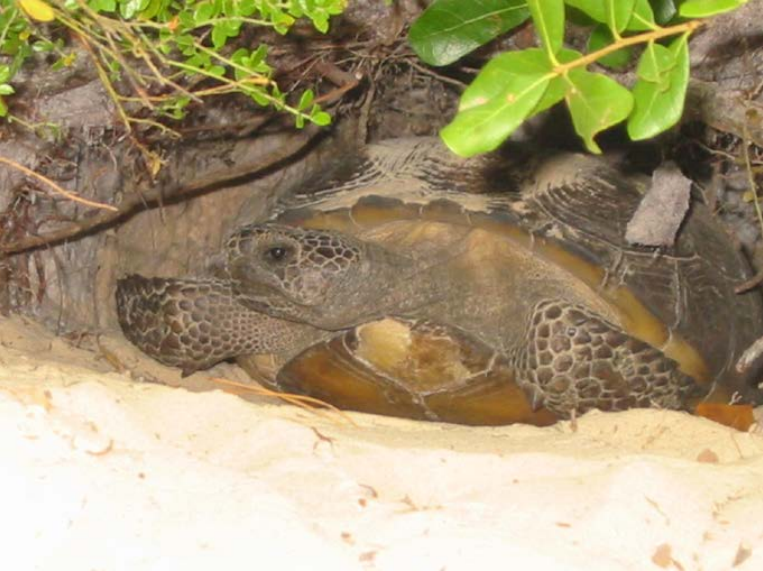
Gopher tortoise (Gopherus polyphemus) at burrow entrance
Protected Species: The gopher tortoise is listed as a threatened species by the State of Florida and is protected by the U.S. Fish and Wildlife Service and the Florida Fish and Wildlife Conservation Commission (FWC) under the Endangered Species Act and Chapter 39 of the Florida Administrative Code. Habitat loss due to land development, road mortality, predation, fire suppression, disease transmission from improper relocation, pesticide use, and illegal poaching all contribute to their decline.
Species Overview
🐢 Description
Gray-brown oval shell (carapace) with a flat top. Male plastron is concave; female plastron is flat. Both sexes have a yellow plastron. Flat, shovel-shaped forelimbs are adapted for digging. Hatchlings are 1½ inches long with a yellow-orange carapace.
🌿 Diet & Lifespan
Eat grasses, beans, and fruits such as gopher apple, pawpaw, and blackberries. Live 40–60 years, with females maturing around age 10. Mate from April to May. Females lay 4–6 eggs in or near the burrow apron.
🏜️ Habitat
Live in dry, upland habitats with well-drained soils. Common habitats in Volusia County include pine flatwoods, xeric oak, sand pine, scrub oak, agricultural lands (pastures), disturbed habitats, and coastal dune and scrub. Require open, sunny areas for nesting, egg incubation, and basking.
🕳️ Burrow
Burrows provide shelter from extreme temperatures and protection from predators. Average 6–8 feet deep and 15 feet long. The oval entrance is sized to the tortoise's length, allowing it to turn around inside. A single tortoise may use more than one burrow over time.
🦎 Commensals & Keystone Species
More than 300 species have been recorded using gopher tortoise burrows, including the Florida mouse, indigo snake, burrowing owl, and a large variety of insects. The gopher tortoise is a keystone species — its removal can have consequences for the entire ecosystem.
Frequently Asked Questions
What should I do if I find a gopher tortoise?
Gopher tortoises are legally protected throughout their range. Their presence does not preclude development; however, permits are needed for relocation efforts. Permits are also required for possession and/or research purposes. If you come across a gopher tortoise trying to cross the road, the Gopher Tortoise Council recommends that you simply carry the tortoise across the road in the direction it was going, while being aware of traffic and potential hazards to yourself. Keep dogs away from gopher tortoises, as dogs have been known to injure and kill tortoises.
Do I need a permit if I have gopher tortoise burrows in my construction area?
If the construction cannot avoid the gopher tortoise burrow by 25 feet, then a permit for relocation is necessary from the Florida Fish and Wildlife Conservation Commission (FWC). Please visit the FWC website for information regarding the permit process. Volusia County Environmental Management may also be contacted for information.
Agency Contact Information
Volusia County Environmental Management
Florida Fish & Wildlife Conservation Commission
Additional Resources
- FWC Gopher Tortoise Information — myfwc.com/GopherTortoise
- Gopher Tortoise Council — gophertortoisecouncil.org
- Tortoise Relocation Guidelines (PDF) — floridaconservation.org
- UF/IFAS Extension — Gopher Tortoise Fact Sheet (PDF)
- Ashton Biodiversity Research & Preservation Institute — ashtonbiodiversity.org
- National Wildlife Federation — Gopher Tortoise