Eyes open
In 1605, a Spanish emissary to the Native Americans explored the Halifax River and chronicled his discovery of several native villages and mounds, including a town at present-day New Smyrna Beach. Alvaro Mexia also reported a population center at the north end of today's Tomoka State Park, north of Ormond Beach. Called Nocoroco, this place was one of the last strongholds for east Florida's native people, soon to be wiped out by European diseases and slave raiding.
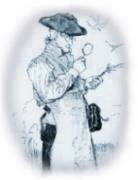
In 1765, royal botanist John Bartram traveled up the St. Johns River - by then British territory - to survey the area's plants. He described huge sand and shell mounds along the stream, and at a traditional crossing which settlers later called Volusia.
In time, certain mounds even acquired the label "mount" as part of their names. Others became important landscape features in this low-lying country, and their locations often appear as small triangles signifying high points on U.S. Coast and Geodetic Survey maps. The sites themselves had concrete markers with plates listing elevations above sea level.
Though many mounds have been destroyed, topographic maps still tell their stories.
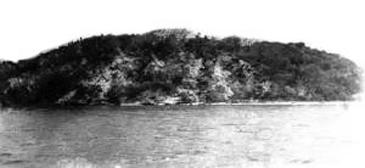
Turtle Mound Florida State Archives
Just how visible were these sites? Turtle Mound (south of New Smyrna Beach at the Canaveral National Seashore) stands more than 50-feet high today, and once was even taller. For centuries, navigational maps have shown this feature since sailors can see it from miles offshore. But why did native people build the region's mounds in the first place? And what later happened to many of these interesting sites?
On the Ground
Volusia County contains outstanding archaeological sites - special for what they show about people's lives. Some of the earliest pottery in North America has been excavated from along the St. Johns River. Tick Island at Lake Woodruff, near DeLeon Springs, has yielded spectacular stone, shell and bone artifacts.
East Florida is famous for its "mounds" on the sea coast, on streams, and in between. Many are middens (piles of shell and other refuse). Some are special mounds for human burials, ceremonies or buildings. Certain sites had more than one use, and native people often lived on top of earlier settlements since east Florida was occupied for so long.