How they lived
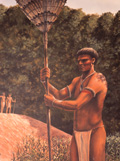 |
| Jerald Milanich, "Florida's Indians:Past and Present,"Explore Magazine, 3:2 |
The Mayaca, Jororo and Surruque existed by fishing, gathering shellfish and native plants, and by hunting wildlife. Fish, shellfish, turtle and whitetail deer were among their mainstays. Some Timucuan people combined hunting activities with farming--primarily in the northern third of Florida.
They used acorns and hickory nuts to produce cooking oil and a kind of flour. An aquatic root called ache (harvested with great difficulty from the swamps) yielded a starch that was important in the Timucuan diet. People regularly consumed palm berries and blueberries.
The Timucua used a rack (called barbacoa in Spanish writings) in some of their cooking to smoke and dry meat and other foods. In fact, they roasted or cured a whole range of game--alligator, eel, raccoon, rabbit, bear, skunk, squirrel and more.
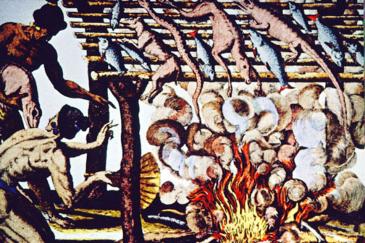
Theodore de Bry, Brevis Narratio, Frankfort 1591
As for river people, Spanish accounts make it clear that some streamside dwellers were not great farmers... and perhaps did not have to be. A 17th Century priest wrote of the Mayaca and Jororo, "On the whole [they] do not work at plantings. They are able to sustain themselves solely with the abundance of fish they catch and some wild fruits." But not every European seemed impressed. To one Spanish governor, the St. Johns River people were "a poor and miserable people who sustain themselves with nothing but fish and roots from the swamps and woods." Because of that, he added, they never paid the Spanish Crown any tribute.
A Timucuan village
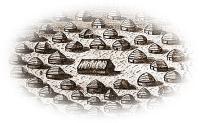
Timucuan people lived in settlements with circular huts and special houses for the chief. There were council buildings, food-handling sites, and charnel houses to prepare the dead for burial. The huts were built of wood driven into the ground and roofed with palm fronds, and they were said to be strong enough to last many years. A doorway less than three-feet high was the only opening, and a low frame of reed bars covered with a bearskin served as a seat and bed. The chief's home was larger, often with three or four rooms and extra food stores.
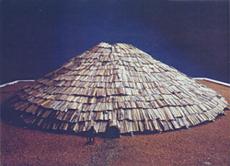
Reconstruction of the Council House from
the San Luis Mission Site
Archaeological excavations of one Timucuan village have revealed ordinary round and oval houses about 20 feet across and 75 feet apart. They had bed platforms along the inside walls, smudge pots to smoke out insects, and central fire pits for cooking.
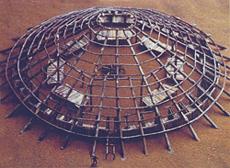
By contrast, the huge council houses could hold as many as two or three thousand people. Spanish friars reported that they were used for assembling, dancing, and drinking cacina. Lined with reed seats that doubled as compartments or niches, these buildings had large cooking pits, sometimes open to the sky. According to a Franciscan priest writing in 1630, people ate once a day after sundown - men in the council house, women at home.