Mosquito-borne illnesses
What mosquito-borne illnesses are in Volusia County?
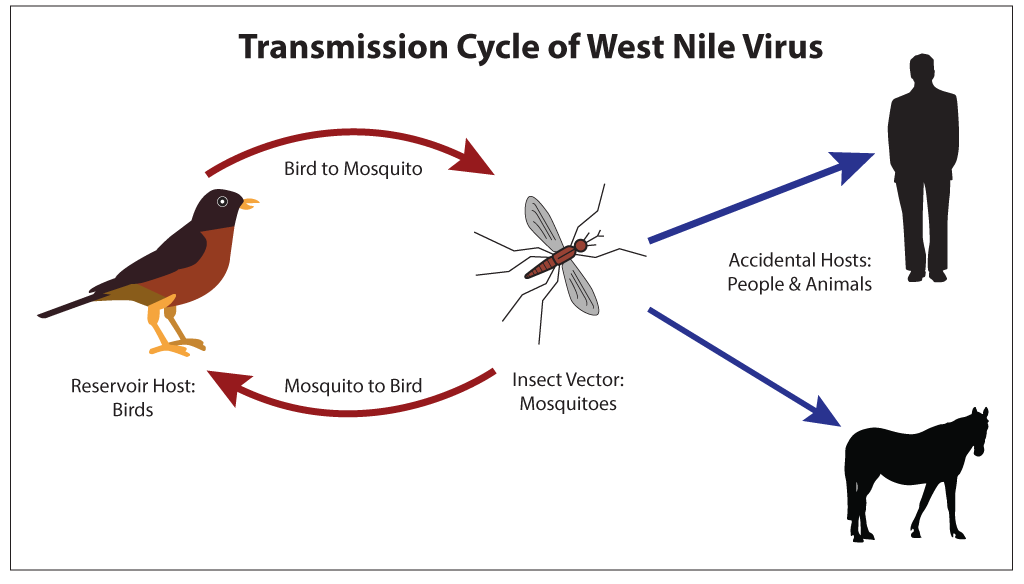
Mosquitoes can transmit viruses, called arboviruses, to people and animals, making them of Public Health Importance. In Florida, we have 3 endemic arboviruses; West Nile Virus (WNV), Eastern Equine Encephalitis (EEE) and St. Louis Encephalitis (SLE). There are several mosquito species in Volusia County that can transmit these viruses to people. These viruses circulate through bird-mosquito interactions. However, sometimes an infected mosquito bites something other than a bird, such as a horse or person. These accidental hosts may then become sick from the virus.
What does Volusia County Mosquito Control do to reduce the risk of people contracting these arboviruses?
Mosquito Control uses an integrated pest management program to detect the presence of virus and the mosquitoes that transmit them. We conduct year-round surveillance using a variety of mosquito traps to identify where vector mosquitoes are present.
We also utilize sentinel chickens throughout the county to monitor arbovirus activity. Blood is taken weekly from the chickens to test for antibodies to the arboviruses WNV, EEE and SLE. Chickens do not become sick and the viruses are unable to replicate in the chicken, therefore chickens cannot spread the virus to other mosquitoes. When antibodies are detected in a sentinel chicken, then we know that virus is circulating in the mosquito population. Mosquito control responds by conducting targeted treatments to lower the number of mosquitoes and reduce the risk of people and animals getting sick.
Exotic/Imported Mosquito Viruses
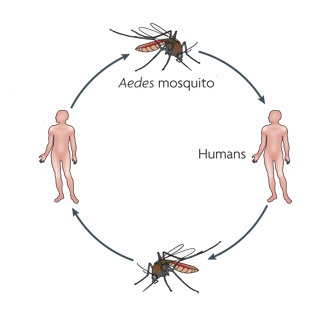
Unlike the endemic viruses of WNV, EEE and SLE, exotic diseases are ones that are not established in our local mosquito population. However, they may be introduced from a place where they are endemic by a traveler. This can happen when a person who gets sick while traveling, comes back home, is bit by one of our local mosquitoes and introduces the disease into the local mosquito population. Although uncommon, this has occurred several times in Florida. These exotic diseases include Chikungunya, Dengue and Zika viruses as well as malaria. For these exotic diseases, humans are the reservoir host, not an accidental one. This means that the disease cycles from mosquito to human to mosquito. The two mosquitoes Aedes aegypti and Aedes albopictus that transmit these diseases are nicknamed “domestic” mosquitoes. This is because they have become adapted to humans, living in and around our homes, are active during the day when we are and prefer to bite us rather than other animals.
How does Volusia County Mosquito Control help reduce the risk of these exotic diseases getting into our local mosquitoes?
We use surveillance traps specifically designed to catch Aedes aegypti and Aedes albopictus. These traps are placed weekly in locations throughout the County of Volusia. These two mosquito species lay their eggs in any container that holds water, often in people’s yards. Source reduction is a type of control method where we reduce the number of places where mosquitoes can lay eggs by dumping water out of containers. Our mosquito control personnel conduct domestic inspections in areas with high numbers of these two mosquitoes to find the mosquito larvae and break the life cycle. They will dump out water, treat with larvicides and educate homeowners how to prevent breeding mosquitoes in their yard. We also respond to any travel related disease cases within the county by determining if the vector mosquito is present and conduct treatments in response. This helps reduce the chance of any exotic disease getting into our mosquito population.
Links for More Information
For more information about mosquito-borne illnesses please visit the links below to the Florida Department of Health, Centers for Disease Control and Prevention (CDC) and UF PIE Prevent & Protect websites.
Florida Department of Health in Volusia County Arbovirus (Mosquito-Borne Illness)
Florida Department of Health Mosquito-Borne Diseases
Endemic Viruses
Florida Department of Health West Nile Virus
CDC Eastern Equine Encephalitis
Florida Department of Health Eastern Equine Encephalitis
Florida Department of Health St. Louis Encephalitis
Exotic/Imported Viruses
Florida Department of Health Chikungunya Fever
Florida Department of Health Chikungunya Fact Sheet
CDC Dengue (English) / CDC Dengue (Español)
Florida Department of Health Dengue Fever
Florida Department of Health Dengue Brochure (English) / Florida Department of Health Dengue Brochure (Español)