Septic Tanks
 Septic Upgrade Incentive Program
Through a Florida Department of Environmental Protection Grant, Volusia County received $2.2 million to provide rebates to homeowners for septic system upgrades. The rebates are available only in the priority focus area of DeLeon Springs for up to $14,000 per existing conventional septic system upgrade at a single or two-family residence or mobile home. Rebates will be paid directly to certified septic system installers and state-licensed plumbers retained by homeowners to update existing systems. Contractors must be pre‐approved by the county and permitted by the Florida Department of Health before the work begins. Learn more.
What is the Problem with Septic Tanks?
Scientists from the Florida Department of Environmental Protection developed a modeling tool to figure out what is negatively impacting the water quality in our springs and found that the top two contributors to reduced water quality are nitrogen from septic tanks and urban turfgrass (also known as residential) fertilizers. Studies from other springs and coastal waterways in Volusia County have shown similar results.
How Did This Happen?
Traditional septic systems are designed to protect human health, not to remove nutrient pollution. Septic systems work by slowly releasing wastewater through a drain field, or soil absorption field. With over 41,000 septic tanks currently in use in the Blue Spring springshed, the nitrogen is polluting our spring and leaching into our groundwater – our drinking water source. This is also true in the other springsheds and watersheds in the county.
Just like with other issues, knowledge about water pollution has improved over the years. When Volusia County first developed, septic tanks were the only option for waste disposal. At low densities these systems did not have a profound effect on our groundwater, springs and rivers. Now, with thousands of systems in a relatively small area, the cumulative effect is harmful. As homeowners, we did not have an opportunity to choose our waste disposal method, but now it is time to make some changes and work together to protect our home and our springs.
What Can I Do?
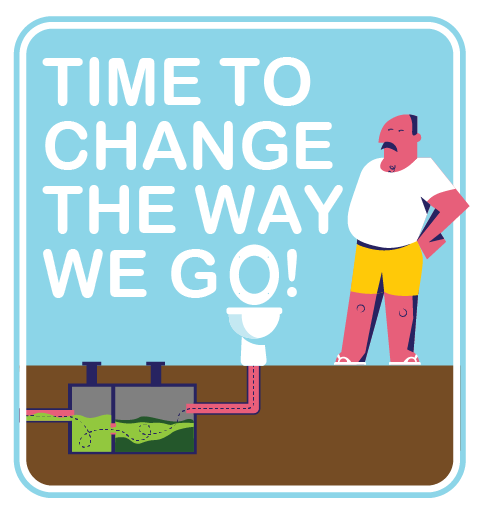
It is time to rethink our waste disposal systems and change the way we go. To reduce your impact, you can:
- Upgrade to a nutrient-reducing system.
- Permitting of Enhanced Nutrient Reducing Onsite Sewage Treatment and Disposal Systems (ENR-OSTDS):
- For more information about septic systems, visit:
- Hook up to sewer, if it is available to you
- Check your local city for information on where sewer is available.
- Find other ways to reduce your nutrient impact on the springshed such as reducing your fertilizer use.
- Remember, to help protect our precious waterways, fertilizer is banned during the summer months, from June 1 through September 30.
- Visit County of Volusia-Be Floridian Now
- Attend a Water Academy, or a Low Impact Development (LID) Workshop
- For more information about Low-Impact Development Workshops near you, visit:
- County of Volusia-Save our Springs and Rivers
What Are the County and Cities Doing?

This is our home, too. We drink the water, we canoe in the St. Johns River and we visit the manatees at Blue Spring. None of us want it to look like the image above; to protect our waters, it's time to change the way we go. Our teams of environmental scientists and managers as well as our partner cities are working together on solutions to protect our home and our drinking water source such as:
- Increasing access to sewer lines in areas that most impact water quality in the Blue Spring springshed, and advocating to government agencies, on behalf of our residents, to try to secure funding to help pay for costs of the infrastructure.
- Expanding the capacity at the Southwest Regional Water Reclamation Facility to handle more wastewater, and to remove more nutrients from the wastewater.
- Working with the state to make funding available for people to upgrade to nutrient reducing systems.
- Some specific projects include:
- City of DeLand:
- The City of DeLand continues to construct sewer retrofit projects in the Spring Hill CRA area – a service area close to Blue Spring. When complete, qualifying residents will be assisted with funds for septic tank abandonment and connection to sewer. In addition, a State Legislative line item grant can assist with impact fees. City of DeLand-Utilities
- The City of DeLand has also upgraded their Water Reclamation Facility. It has a design capacity of treatment for 6 million gallons of average flow per day. City of DeLand-Wastewater treatment plant
- City of Orange City:
- The City of Orange City is connecting residential and commercial customers in areas served by the City sewer. If you are currently a resident of Orange City and want more information about connecting, please contact Orange City Septic to Sewer Hotline at (386) 851-7543 or send an email to septictosewer@orangecityfl.gov.
- City of DeLand:
I Don’t Live Next to a Spring, Why Does This Concern Me?
If you live anywhere in West Volusia, you might live in what is called the springshed of Blue, Gemini, or DeLeon Springs (see map). A springshed is an area of land that drains to a spring. That means that groundwater in your neighborhood flows to a spring – even if you live miles away. From the river to the ocean, west to east across our beautiful county, we are all connected by the groundwater - our drinking water source and the water that feeds our springs.
Answers to Frequently Asked Questions:
- A septic system does not have to be broken to negatively impact water quality.
- There is no action you can take to reduce the impact of your current traditional septic system. Being careful what you flush, using products or additives, flushing yeast and/or pumping your system regularly will NOT reduce the impact of the nitrogen and phosphorus pollution coming out of your septic system.
- Seriously, we talked to your Aunt Sally’s neighbor’s cousin’s friend who has lived in Volusia for 47 years and we know that they said all you need to do is flush some yeast. We promise, this will not reduce the amount of nitrogen leaching from your drain field. No disrespect to Aunt Sally.
- To keep the septic system in good working order and ensure it does its job of efficiently moving your waste, it is still important to be careful what you flush.
- When nitrogen pollution from septic tanks seeps into our groundwater, it affects our springs and drinking water. Groundwater is water located underground and is also called the aquifer – specifically, the Floridan Aquifer. Groundwater feeds our springs and provides our drinking water supply.
-