Wastewater Treatment Facilities and Reuse
How does Wastewater Relate to a Spring's Water Quality?
Scientists from the Florida Department of Environmental Protection developed a modeling tool to figure out what is negatively impacting the water quality in our springs and found that the top two contributors to reduced water quality are nitrogen from septic tanks and urban turfgrass (also known as residential) fertilizers. Among other sources, a much smaller contribution was determined to be from wastewater treament facilities and reuse.
How did this happen?
Wastewater Treatment
We (local governments) recognized that through the wastewater treatment process, we are a part of the problem, and we’re making great strides to reduce the nutrient pollution from Wastewater Treatment Plants (WWTP). At the time the nutrient study was written, for Blue Spring the contribution from WWTP was 8%, and since then, with the steps local governments have taken, we’ve reduced that contribution to 4%.
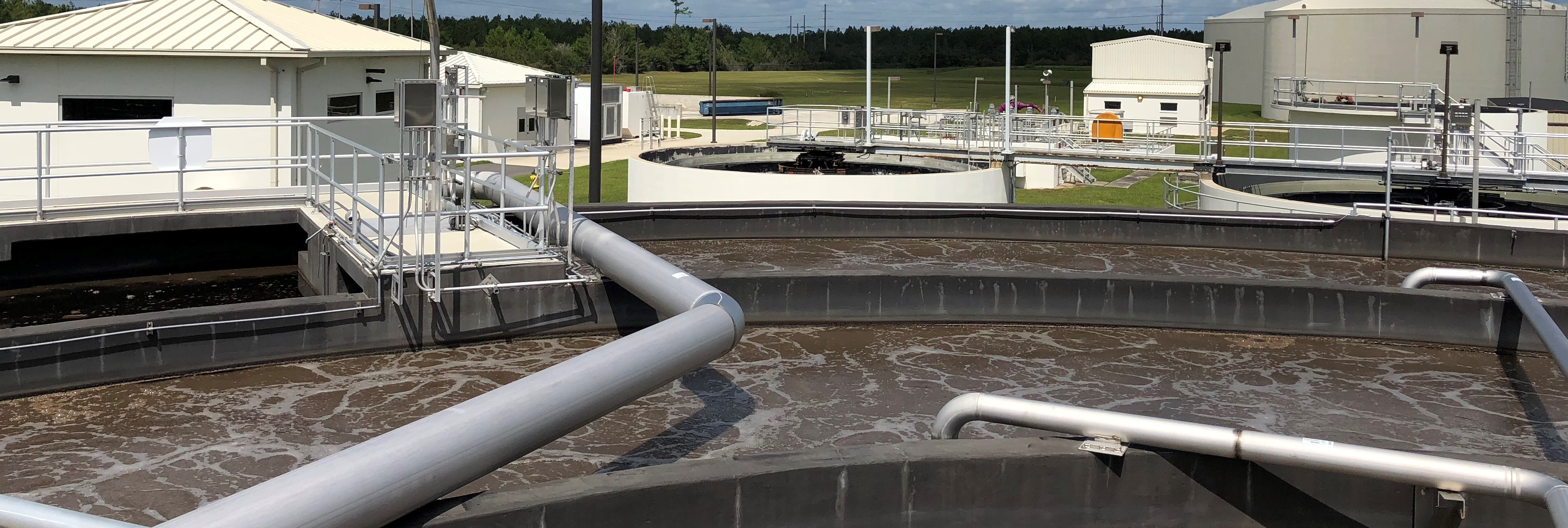
One of these steps is the construction of the Southwest Regional Water Reclamation Facility, an advanced wastewater treatment facility. This project updated the technology at the WWTP to remove greater amounts of nitrogen and phosphorous in the treated wastewater. That treated water is then used as reclaimed water for irrigation of lawns (see below), or allowed to percolate back into the ground. The upgrades have a double benefit of reducing nutrients in two categories, Wastewater Treatment Facilities and Wastewater Treatment Reuse.
The plant upgrade also increased the amount of wastewater that can be treated, called capacity, from 1.7 million gallons per day to 2.7 million gallons per day. This increased capacity can be used to accommodate homes that switch from septic to sewer in the future. Here is the Advanced Wastewater Treatment flyer, and County of Volusia-Utilities website.
Wastewater Treatment Reuse or “Reclaimed Water”
At the time the nutrient study was completed, the contribution from Wastewater Treatment Reuse (also known as reclaimed water) was 4%. The treatment process does not remove all of the nutrients, so reclaimed water contains some amount of nitrogen and phosphorus; the amount of nutrients can vary depending on the WWTP. With the upgrade to the Southwest Regional Water Reclamation Facility, we have reduced the amount of nitrogen and phosphorus in the reclaimed water and therefore reduced the percentage contributed to the springshed.
Reclaimed water is wastewater that has been treated to meet standards established by the Florida Department of Environmental Protection. Reclaimed water is clean, clear, odorless and essentially free of bacteria and viruses. It is ideal for irrigation, but not suitable for human or animal consumption. (For more information about reclaimed water, visit: City of DeLand-Reclaimed Water or Florida Department of Environmental Protection-Wastewater)

What can I do?
- Conserve water in your home
Reducing the water you use reduces the amount of water that goes to the wastewater treatment plant for processing. Using water wisely saves money on your water bill.
For more information about water conservation, check out these tips: County of Volusia-Water Conservation
- Use Reclaimed water
Using reclaimed water for your irrigation system not only saves our drinking water, it also recycles our wastewater. Call your water utility company, to find out if hooking up to reclaimed water is an option for you.
- Water Wisely
Only water your landscape if your plants are showing signs of stress, like if the leaves of your plants are curling, or you can see footprints in your lawn that don't recover quickly.
- Install water-efficient technology
Use rain sensors and irrigation timers to control when and how much you irrigate.
- Use native and Florida-Friendly landscaping practices
When the Right Plant is in the Right Places, it can reduce or eliminate your need for fertilizer and irrigation.
You can get more information about the “Right Plant, Right Place” principle here: Right Plant, Right Place
- Install buffer zones around your waterfront
Whether they’re on the bank or in the water, a low-maintenance zone around your waterfront can help protect your waterway from excess fertilizer nutrients.
For more information about Florida friendly plants for pond shorelines, see the UF/IFAS Extension’s webpage on the topic here: University of Florida-IFAS Extension
What is the County doing?
- We’ve upgraded the wastewater treatment plant to reduce the nutrients in the reclaimed water
- Southwest Regional Water Reclamation Facility
- Volusia County Water Resources and Utilities Division partnered with the Florida Department of Environmental Protection (DEP) and the St. Johns River Water Management District (SJRWMD) for the construction of an advanced wastewater treatment and increased reuse capacity at the Southwest Regional Water Reclamation Facility, in DeBary, FL. The three agencies contributed a combined $12.7 million for facility upgrades in order to help to reduce nutrient levels in Volusia Blue Spring.
For more information about this project, visit Advanced Wastewater Treatment
- Volusia County Water Resources and Utilities Division partnered with the Florida Department of Environmental Protection (DEP) and the St. Johns River Water Management District (SJRWMD) for the construction of an advanced wastewater treatment and increased reuse capacity at the Southwest Regional Water Reclamation Facility, in DeBary, FL. The three agencies contributed a combined $12.7 million for facility upgrades in order to help to reduce nutrient levels in Volusia Blue Spring.
- Southwest Regional Water Reclamation Facility
- Providing reclaimed water to residents
- Volusia County and surrounding municipalities provide the option for residents to hook into reclaimed water infrastructure. Call your local utility provider to see if this option is right for you! See the Reclaimed water section above for more information.
- Maintenance of pipe lines
- Volusia County Water Resources and Utilities conduct regular water system flushing to remove any mineral build-up and sediment from the pipes and also to ensure that water circulates adequately throughout the system. Volusia County regularly maintains its facilities and infrastructure to ensure the efficient transportation of wastewater and reclaimed water to and from the treatment facility.
- Volusia County Water Resources and Utilities conduct regular water system flushing to remove any mineral build-up and sediment from the pipes and also to ensure that water circulates adequately throughout the system. Volusia County regularly maintains its facilities and infrastructure to ensure the efficient transportation of wastewater and reclaimed water to and from the treatment facility.
- In county operations
- Volusia County works to reduce our water use in our local government operations.
- Volusia County works to reduce our water use in our local government operations.
- Outreach and education
- We’re busy spreading the word on water quality far and wide! We’ve been engaging with the community through presentations, programs, festivals and events throughout the county.
- In addition to in-person outreach, we have also been educating residents about nutrient pollution in our water ways virtually through videos and posts on Facebook, articles in our quarterly e-newsletter, and webinars.
- Through the Save our Springs and Rivers grant we are providing water academies and Low Impact Development workshops.
-